Dorian Jazz
Awakening the Angel System: Apocalypse: A LitRPG Progression FantasyDorian Jazz, also called the Red Rook and General Jazz, is a former commission officer of the Empire, a survivor of the Second Solomon Expedition, and the chief enforcer of the High Table. His importance lies in the contradiction between his public function and private convictions: he raises an army for Archangel Michael, yet his final letter describes faith betrayed, soldiers loved, a lover lost, and a dream of improving the world. He dies in a deliberately bounded duel with Jack, preserving the lives of his men and leaving behind the information Jack needs to continue the campaign.
Identity and Position
Dorian Jazz is introduced through the Red Rook identity rather than as an ordinary military officer. Jack learns from the dossier that the Red Rook is both a former Imperial commission officer and a survivor of the Second Solomon Expedition. That second identity makes him more than a local commander: he is a living remnant of an earlier expedition whose survivors and knowledge may connect the present military crisis to Heaven, believed by Sahaqiel to lie over the continent known as Africa.
His authority is political as well as military. Selfia identifies him as the chief enforcer of the High Table, linking the armed movement around Zanzibar to the wider power structure directing the conflict. Equipment and personnel have been moved into Zanzibar in large numbers, and the city has become isolated after contact is lost. The concentration of arms, soldiers, and specialized boats reveals that Jazz is not merely defending a position; he is assembling the force required for a major operation toward the African continent.
The narrative presents him as physically unremarkable beside the power he commands. He is described as an average man in an officer’s uniform, with cybernetics and no mana core. His metallic additions and hollowed appearance mark the damage of military service, but he lacks the magical talent that defines many of the story’s larger combatants. The contrast gives his presence a particular severity: his authority rests on command, endurance, technology, and conviction rather than supernatural power.
Zanzibar and the Trap
The confrontation at Zanzibar begins as an attempted military interception. Jack orders the Selfian Wyvern fighters not to release their payload, and the aircraft pass overhead without attacking. Jazz has arranged the encounter as a trap, but the trap is also an invitation. He steps out from the crowd before Jack with an army of followers behind him and a detonator held in his robotic hand, making the threatened destruction of the site the condition under which the meeting takes place.
Jazz explains that the purpose of the trap is to meet Jack. His emergence from the crowd converts a broad military engagement into a personal confrontation, while the detonator keeps the surrounding soldiers and civilians within the logic of mutual risk. Yet the scene does not reduce him to a hostage-taker. He challenges Jack’s moral distinction between killing and command, arguing that Jack also kills when circumstances suit his needs. The accusation forces the encounter away from simple hero-versus-villain terms: both men are shaped by violence, even though they serve opposing objectives.
Jazz then abandons the broader spectacle of the assembled army and proposes a specific contest. He has a subordinate open a crate with a crowbar and draws out a large silver buster blade whose energy coils around a stylized dragon inscription. With the weapon raised, he requests a duel to the death. His terms are explicit: no powers, no mana, only skill. The restriction strips away the magical hierarchy that usually determines the balance between fighters and makes the confrontation a test of trained human ability, will, and personal accountability.
Duel with Jack
Jazz frames the duel as an exchange of losses. He tells Jack that Jack took someone extremely precious from him and presents the contest as an eye for an eye. The statement establishes revenge as his immediate motive, but it also gives revenge the shape of grief. Jazz is not seeking a random execution; he wants Jack to stand before him and answer for a death that has altered his own life.
The duel exposes the distance between Jazz’s ordinary appearance and his effectiveness. He is not physically intimidating and possesses no mana core, yet he stands before Jack with a detonator and a massive energy-wreathed sword. His power is concentrated in preparation and discipline. The army behind him, the weapon selected for the fight, and the insistence on skill all show a commander attempting to impose rules on a world increasingly governed by overwhelming magical and military forces.
Jack considers sparing him, but the possibility collapses under the knowledge of what Jazz has done and what he has enabled. Jazz has been complicit in raising an army in Archangel Michael’s name, and Jack concludes that he must die. Before the execution, Jack asks for his last words. Jazz does not plead for himself. He asks Jack to spare his men, has an officer disarm the detonator, and promises that everything Jack needs to know will be found on his desk. Jack accepts the bargain and brings the blade down.
Final Evidence and Inner Conflict
Jazz’s last request completes the pattern established by his conduct. Even while confronting the man who has become his enemy, he places the survival of his followers above his own life. Jack’s later judgment calls Jazz a soldier and a puppet much like Hoffman, but also recognizes that Jazz made an honorable request and kept his side of the deal. This assessment does not absolve him of his role in Michael’s campaign; it identifies the moral residue that remains inside a compromised instrument of power.
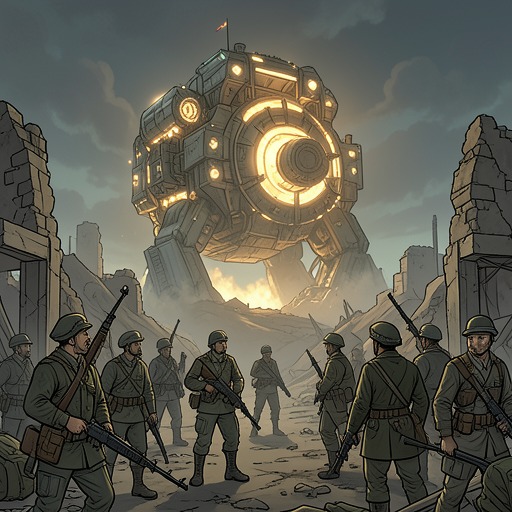
The immediate military result confirms the practical value of Jazz’s surrender. Admiral Skirita enters the town uncontested with a mechanized division and reports eight destroyer-class boats, three cruisers in drydock, more than two thousand prisoners, and only twelve casualties. The captured fleet and personnel expose the scale of Jazz’s preparations and turn the Red Rook’s defeat into a strategic gain. His death therefore has two consequences at once: it removes a dangerous enforcer and opens the material route toward the next stage of Jack’s pursuit.
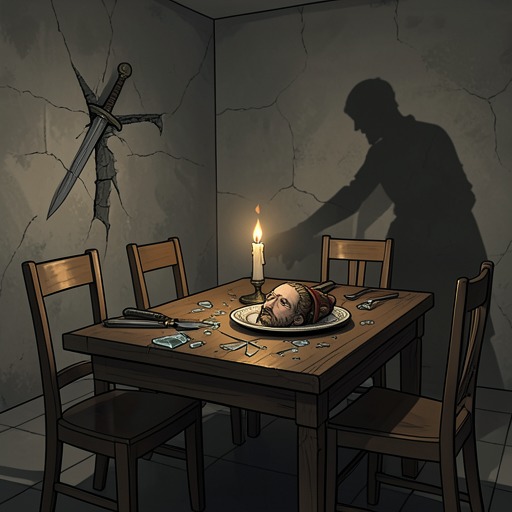
At Jazz’s desk, Jack finds a framed picture of the man he has killed standing beside a familiar woman whom Jack has also killed. The photograph changes the emotional meaning of the duel by making Jazz’s loss visible rather than merely reported. It joins his personal grief to the larger chain of deaths through which the campaign has been advancing.
The letter on the desk supplies the clearest account of the person behind the title. Jazz writes of misplaced faith in the Black King, love for his soldiers and the Gold Queen, the ideological reasons behind his actions, and his dream of making the world better. He also records his distress at being abandoned by the crown and his powerlessness at failing to save his lover. The letter does not erase his crimes or his military allegiance, but it prevents the Red Rook from remaining a hollow symbol. Behind the cybernetics, uniform, and command structure stands a man whose idealism has been redirected into service of forces that ultimately leave him isolated.
Narrative Role and Significance
Dorian Jazz occupies the tragic space between agency and instrumentality. He is powerful enough to organize an army, control a strategic port, and threaten Jack with a detonator, yet Jack understands him as a puppet of a larger authority. The contrast is central to his narrative role: Jazz is responsible for concrete harm, but he is also evidence of how institutions convert soldiers’ loyalty, grief, and hopes into machinery for another leader’s design.
His Red Rook persona functions as a military mask. It compresses the former officer, expedition survivor, commander, lover, and failed idealist into a chess-piece title subordinate to the Black King. The final confrontation breaks that compression. The duel restores a personal scale to the conflict, while the photograph and letter reveal attachments that the public identity conceals. His death is consequently both an execution and an unveiling.
Jazz also serves as a threshold figure for Jack’s advance. The lead obtained from his connection to the Second Solomon survivors points toward Heaven and Africa; the intelligence left on his desk gives Jack a practical continuation of the pursuit; and the captured boats and prisoners demonstrate that defeating him changes the strategic map. The Red Rook falls, but the information and material infrastructure gathered under his command pass into the hands of his enemies. His ending therefore embodies the story’s recurring irony: a soldier can be defeated, condemned, and remembered as a puppet, while the causes and systems that used him continue beyond his death.